The Shoe-and-Sock Rule That Makes Color Blocking Look Intentional
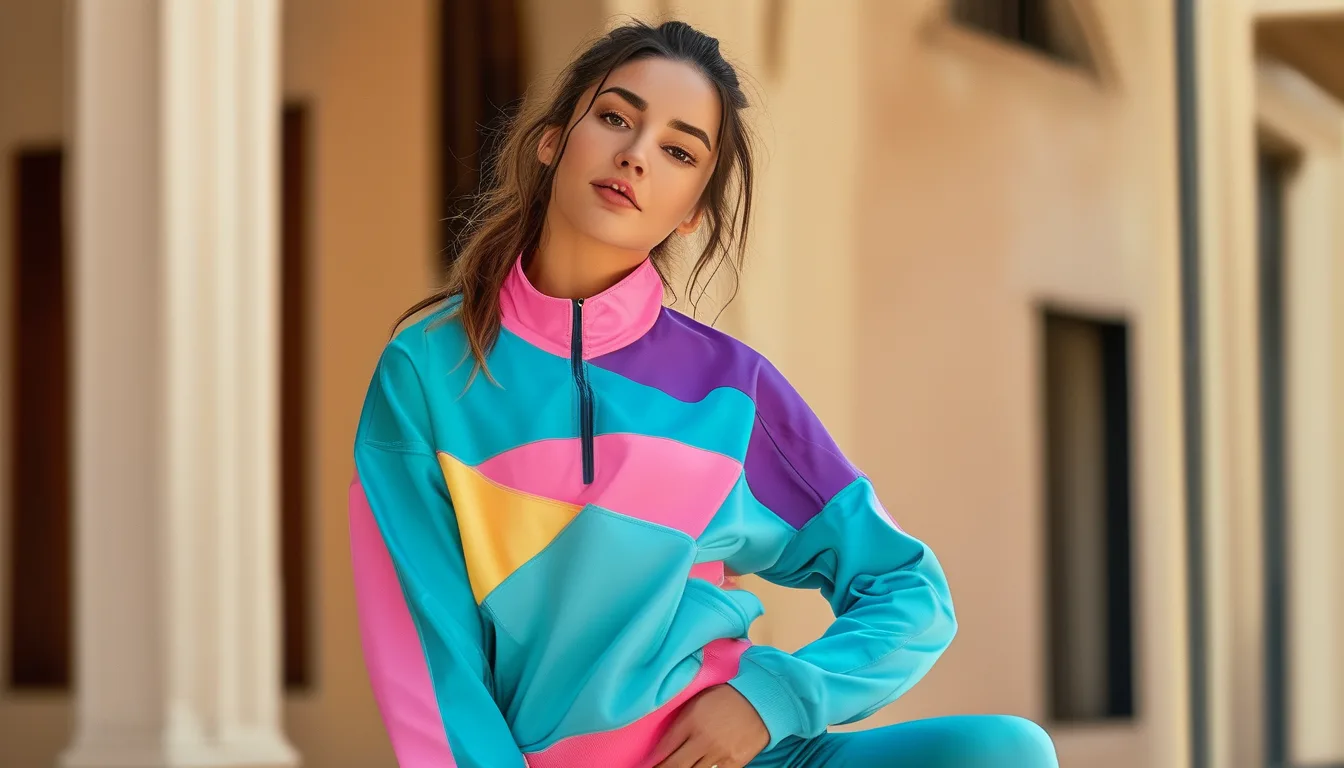
Quick Answer: Pick your sneakers to match the smallest color in your color-blocked outfit, not the largest — this pulls the whole look together without introducing a fourth competing color, which is the most common mistake that makes color blocking look accidental instead of intentional.
A color-blocked top and legging combo can look perfectly deliberate — until the wrong sneaker color turns it into visual noise. The fix is a specific, simple rule most people don’t know to apply.
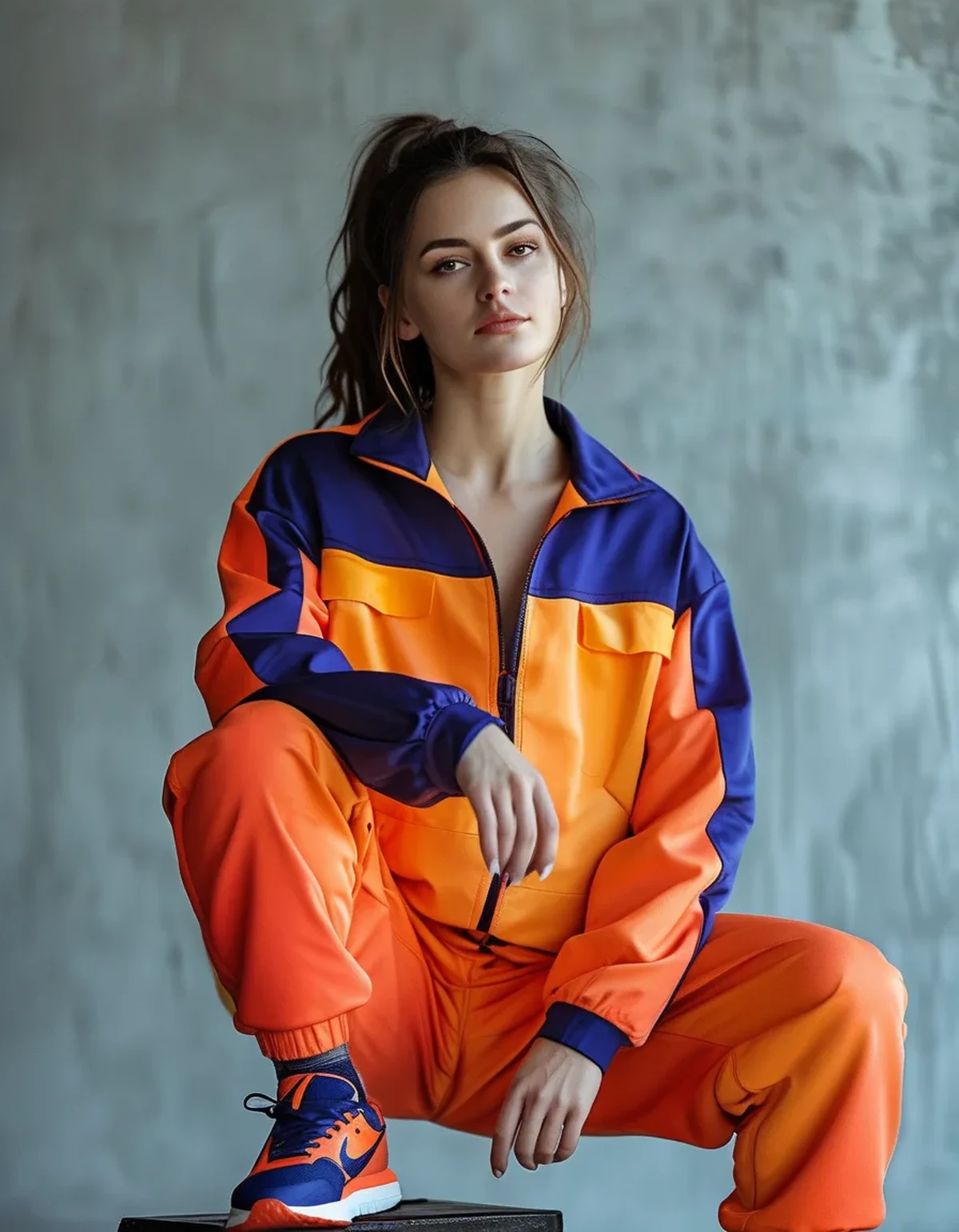
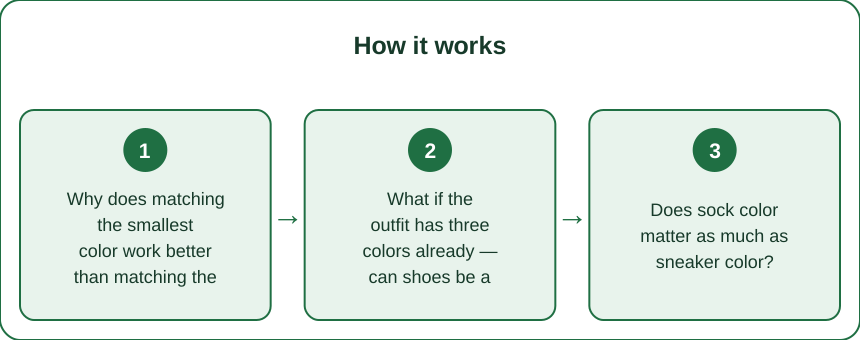
Why does matching the smallest color work better than matching the largest?
Matching sneakers to your dominant color (say, the leggings) makes the shoes disappear into a color that’s already prominent, which is fine but forgettable. Matching the smallest accent color — a trim, a logo, a color-block panel — pulls that detail down to the floor and reads as a deliberate styling choice rather than a coincidence.
What if the outfit has three colors already — can shoes be a fourth?
Generally no — a three-color outfit is already at the edge of what reads as intentional rather than busy, and a fourth new shoe color usually tips it into visual clutter. Repeating one of the existing three colors in the shoe is safer and still finishes the look effectively.
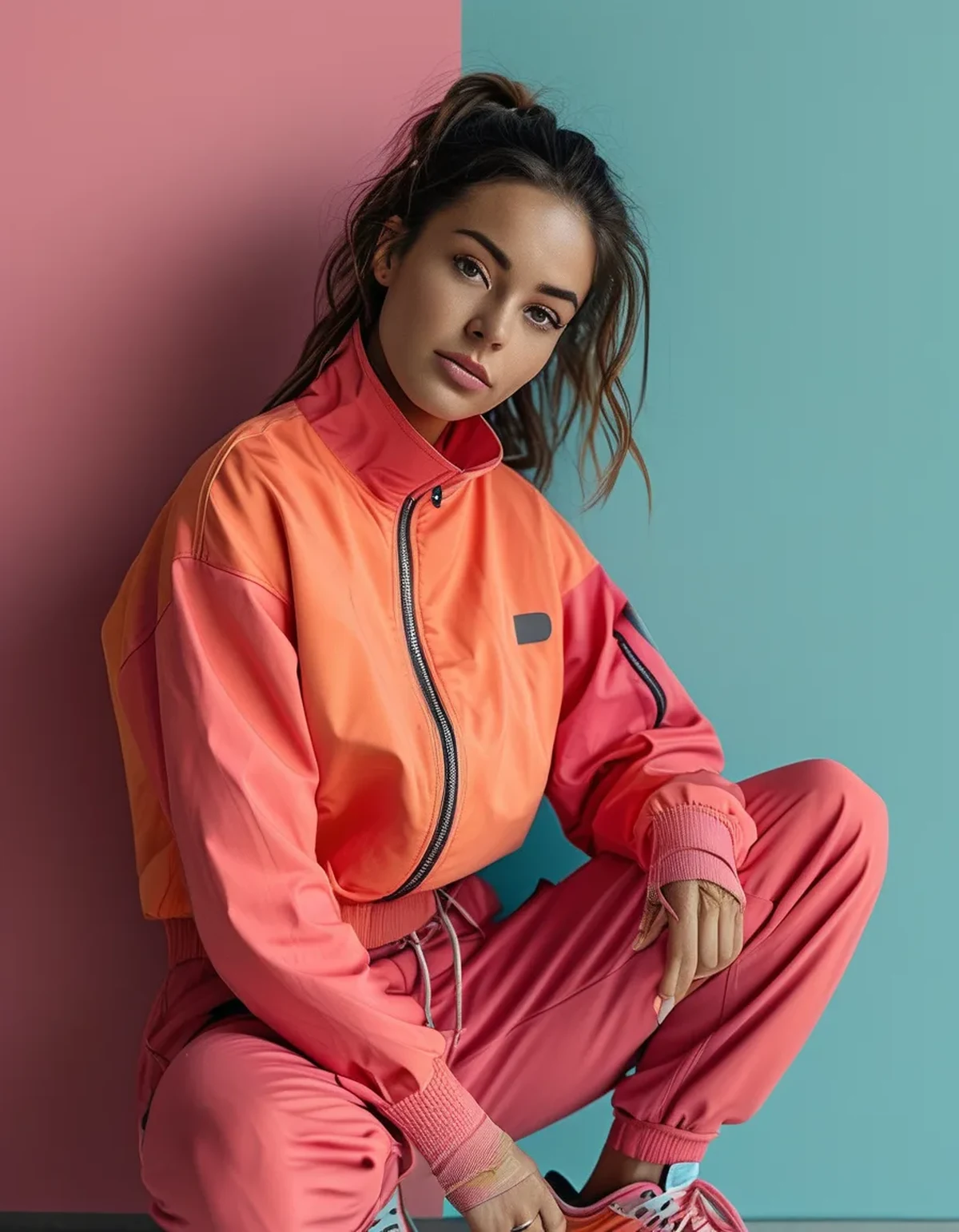
Does sock color matter as much as sneaker color?
Less, but it’s not nothing — a visible sock in a color that clashes with both the outfit and the shoe undoes some of the careful matching above it. Neutral (white, black, or matching the shoe) is the safest default; a matching accent-color sock is an advanced move for those comfortable pushing it further.
What’s the easiest fallback if no sneaker matches any outfit color exactly?
White or black sneakers function as a true neutral in a color-blocked outfit — they won’t add cohesion the way a color-match does, but they won’t introduce competing visual noise either, which makes them the safe default when a true match isn’t available.
FAQ: Color Blocking Footwear Questions, Answered
Should sneakers ever be the boldest color in the outfit?
It can work, but it shifts the sneaker into being the outfit’s focal point rather than a supporting piece — intentional, but a different styling choice than the smallest-color-match rule.
Does this rule apply to boots and sandals too, not just sneakers?
Yes — the smallest-color-match principle applies to any footwear color choice, not sneakers specifically.
What if my color-blocked outfit is monochrome with just an accent?
Match the accent, not the base color — the same logic applies even with just two colors involved.
TL;DR:
- Match sneakers to your outfit’s smallest accent color, not the dominant one
- Avoid introducing a fourth new color once an outfit already has three
- Keep visible socks neutral unless intentionally matching an accent color
- White or black sneakers are the safe fallback when no color matches exactly
The smallest-color-match rule is the single easiest way to make color blocking look deliberate instead of accidental.
See It in Motion
Seen here: Super High Waist Embossed Yoga Leggings with Inner Pocket — shop it on bubblelime.com
Keep Reading
This article is for general informational and styling purposes only. Fit, sizing, and product availability may vary.