Why Your Colorblock Outfit Looks Different Standing Still Than When You Move
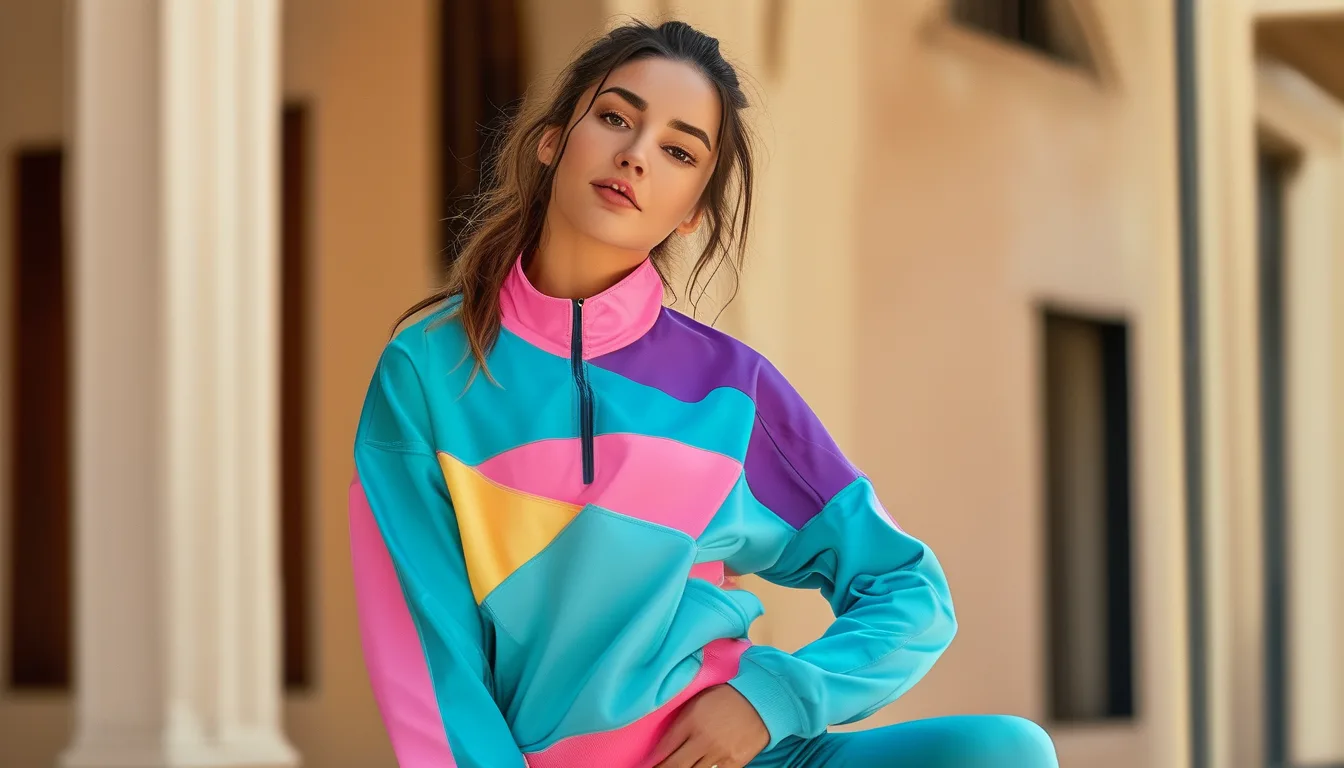
Quick Answer: Colorblocking is read as a set of shapes, and moving changes the shapes. Blocks that line up standing still separate when you bend, twist, or stride, so a design that depends on alignment falls apart the moment you use it. The blocks that survive movement are the ones defined by the garment’s own structure - a contrast waistband, a side panel, a yoke - because those move with your body rather than against a line they were matched to. Vertical blocks hold up in motion; horizontal ones fragment.
You checked it in the mirror. The panel on the leggings lined up with the hem of the top, the whole thing read as deliberate, and you left the house pleased.
Then someone sent you a photo from the class and it looks like three different outfits arguing.
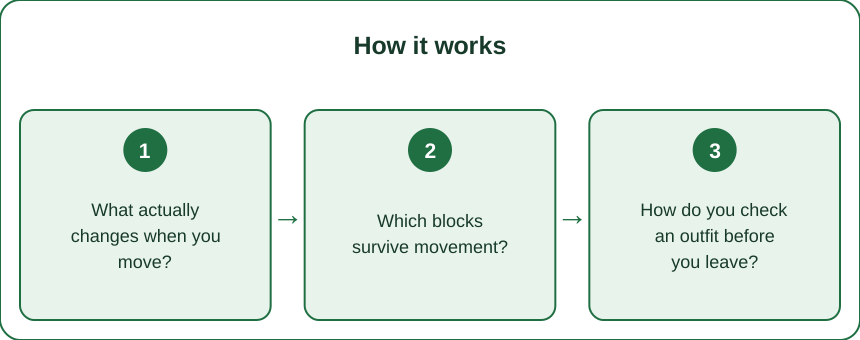
What actually changes when you move?
The relationship between blocks, which is the only thing colorblocking is made of.
Colorblocking works because your eye reads distinct areas of colour as shapes and reads the relationships between them - alignment, proportion, symmetry. A static mirror check shows you one arrangement of those relationships. Movement produces hundreds of others.
Three specific things break:
Alignment fails first. Any effect that depends on two edges lining up - a top hem meeting a legging panel, a sleeve block matching a side stripe - only works in the one position you checked. Raise your arms and the sleeve block moves several inches relative to everything else.
Horizontal blocks fragment. A horizontal colour change reads as a clean line when you stand square. In a lunge, a stride, or a twist, that line bends, and the two colours it separates now form an irregular shape that the eye reads as a mistake rather than a design.
Layers shift and cover. The waistband block disappears under a top that rides up, the side panel is half hidden by an arm, and the proportion you designed is now a different proportion.
And there is a photographic factor on top. A photo captures one instant of movement, usually the least composed one, and flattens depth. Blocks that wrap around the body - side panels especially - are read as three-dimensional in person and as odd flat shapes in a picture. This is why an outfit can genuinely look good in the room and bad in the photo without either being wrong.
Which blocks survive movement?
The ones built into the garment’s own construction, because they move with you.
Hold up well:
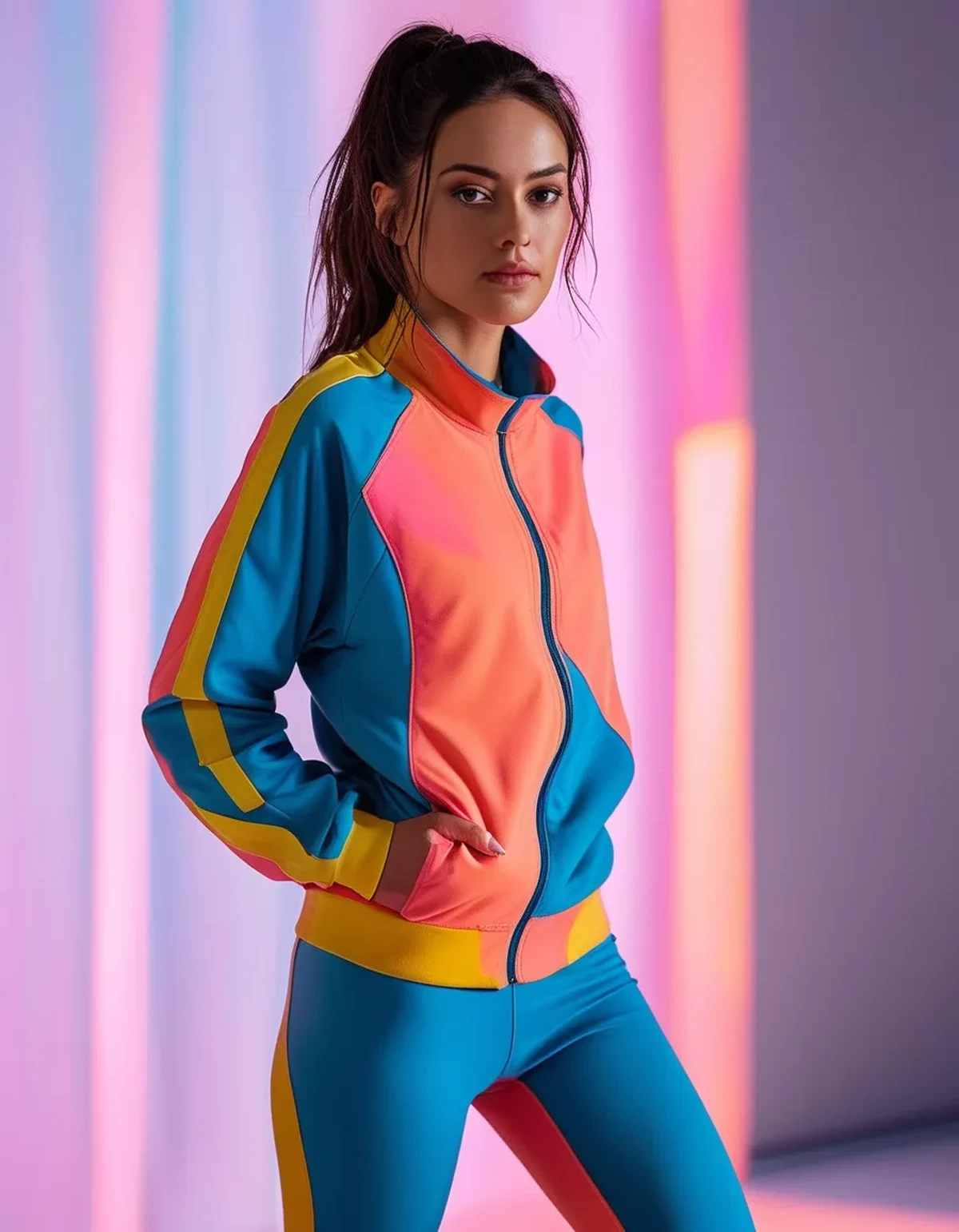
Vertical side panels. They run along the direction of the leg and stay legible in a stride. They also lengthen the line, so they photograph well from any angle.
Contrast waistbands. Anchored to a body landmark that does not move relative to itself. A contrast waistband looks the same in a squat as standing.
Yokes and shoulder blocks. Sit on a stable part of the torso and stay coherent through arm movement.
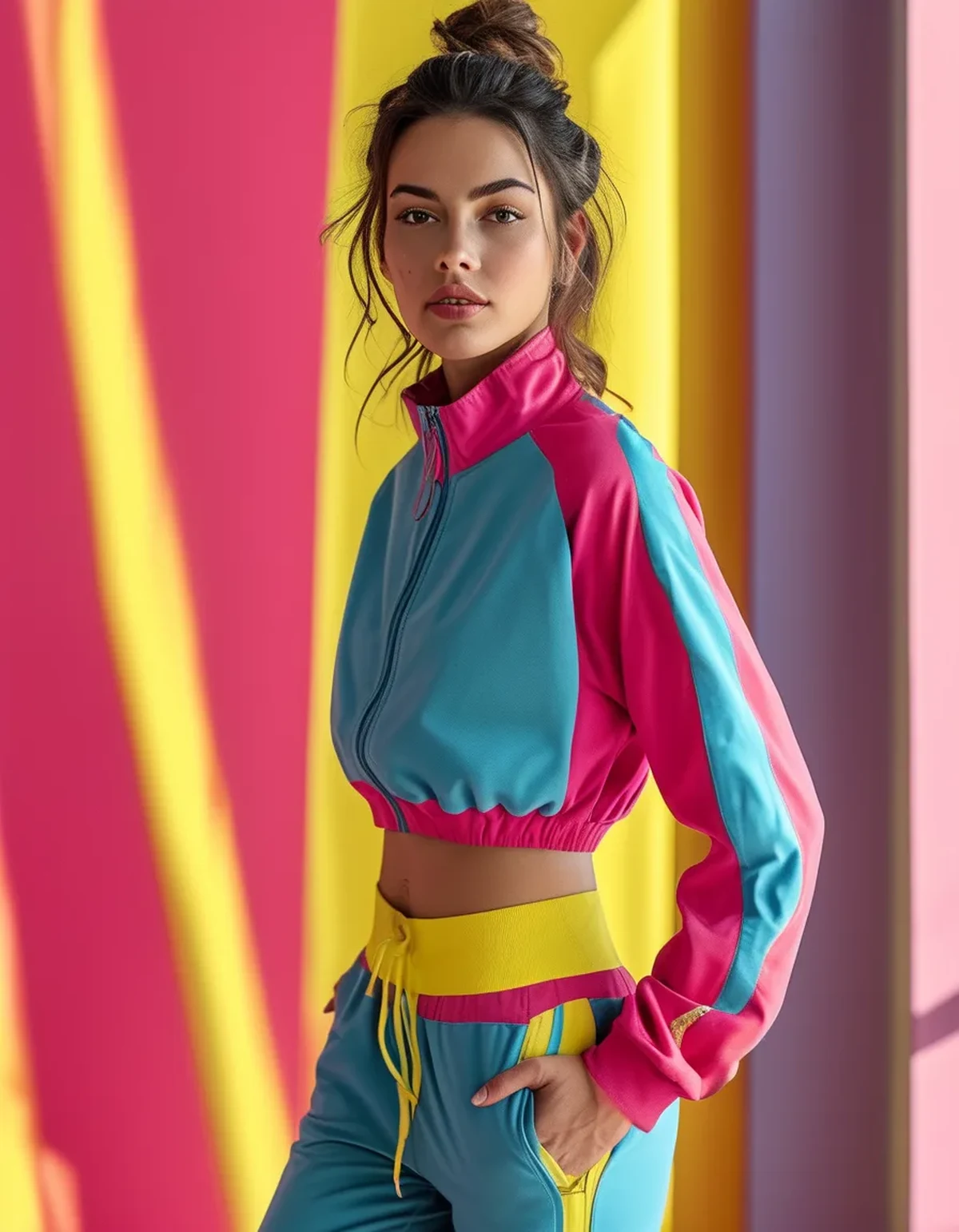
Full-piece blocking. One colour top, another colour bottom. Almost impossible to break, which is why it is the most common approach and why it always looks intentional.
Asymmetric single blocks. One contrast panel on one leg or one sleeve. Because there is nothing to align it to, movement cannot break the alignment.
Break easily:
Horizontal thigh or calf bands. They bend with the knee and distort in every dynamic position.
Anything depending on top-to-bottom alignment. The single most common failure. A top hem matched to a legging panel is checked once, in the mirror, and is never in that relationship again.
Small blocks. Under a few inches, they read as detail in the mirror and as noise from a distance or in motion.
Symmetric matched pairs. Two blocks that mirror each other look precise standing and immediately look wrong when one side moves and the other does not - because you have set up an expectation the movement then breaks.
The design rule that follows: block along the axis of movement, not across it. Vertical for legs, horizontal only where the body does not bend.
How do you check an outfit before you leave?
Move in the mirror instead of standing in it. Four checks, thirty seconds.
1. Raise your arms overhead. This is where tops ride up and waistband blocks appear or vanish. If the outfit only works with your arms down, it does not work for a workout.
2. Do a bodyweight squat. Reveals what happens to any horizontal block on the thigh, and whether the top-to-bottom relationship survives hip flexion.
3. Take one big step forward, and hold it. A stride separates blocks on the legs and shows you what the outfit looks like in the position you will actually be photographed in.
4. Turn side-on and look over your shoulder. Side panels and asymmetric blocks read completely differently in profile, and profile is the angle you never check.
If it holds through all four, it will hold in a class.
And a photo-specific check if photos matter: take one picture in a lunge or mid-stride rather than standing. That is the frame you will be caught in, and it is the honest test. Blocks that survive a moving photo survive everything.
Two fixes when something fails the test:
Reduce to two colours. Three-colour blocking is where most of the fragmentation happens, because there are more relationships to break. Two colours in motion almost always still read as intentional.
Make one piece the whole block. If the alignment keeps failing, stop aligning. Solid top in colour A, solid bottom in colour B, and the block is the garment itself - which no amount of movement can disassemble.
Myth vs Fact: Colorblocking in Motion
Myth: If it looks good in the mirror it will look good in a photo. Fact: A mirror shows one static pose in three dimensions. A photo shows one instant of movement, flattened. Blocks that wrap the body survive the first and not always the second.
Myth: More blocks means more interest. Fact: More blocks means more relationships that can break. Two colours holds up in motion far better than four, and reads as more deliberate.
Myth: Symmetry is safer. Fact: In motion, symmetry is riskier - it creates an expectation of matching that the body immediately breaks by moving one side. Asymmetric single blocks are much more forgiving because there is nothing to fall out of alignment.
Myth: Horizontal blocks are widening, which is the only reason to avoid them. Fact: The bigger practical issue is that they bend and distort in every dynamic position. That is a design failure rather than a flattering-or-not question.
Myth: You need matching sets to colorblock properly. Fact: Matching sets are the easiest route and not the only one. A solid top with contrast-panel leggings works perfectly well, and one asymmetric block on a plain base is the most movement-proof option there is.
FAQ: Colorblock Movement Questions, Answered
Why does my outfit look better in the changing room than in class?
Lighting and stillness. Changing rooms have flattering directional light and you are standing square. A studio has flat overhead light and you are moving. Check the outfit near a window, in motion, before you decide.
Does this apply to prints too?
Partly. Prints tend to be more forgiving in motion because there is no single alignment to break - the eye reads texture rather than shapes. Large-scale prints are the exception and can fragment much like large blocks.
What is the most reliable colorblock for a class where I will be photographed?
A solid top in one colour, leggings in another, with a contrast waistband tying them together. Three colours, no alignment dependency, and it works from every angle in every position.
Should I avoid colorblocking if I mostly do yoga?
No, but favour vertical panels and contrast waistbands over horizontal bands. Yoga involves more extreme positions than most training, so the alignment-dependent designs break more thoroughly - and the structural ones hold up completely.
TL;DR:
- Colorblocking is read as shapes and relationships, and movement rearranges both.
- Blocks tied to the garment’s own structure - side panels, waistbands, yokes - move with you and survive.
- Top-to-bottom alignment is the most common failure. It exists only in the pose you checked.
- Vertical blocks hold up; horizontal ones bend and fragment at the knee and hip.
- Asymmetric single blocks are the most movement-proof, because there is nothing to fall out of alignment.
- Check by raising your arms, squatting, striding, and turning side-on - thirty seconds, and it catches everything.
If an outfit keeps looking worse in photos than in the mirror, the design is probably depending on an alignment that only exists when you stand still. Stop aligning and let the garments themselves be the blocks.
See It in Motion
Seen here: Super High Waist Embossed Yoga Leggings with Inner Pocket — shop it on bubblelime.com
Keep Reading
This article is for general informational and styling purposes only. Fit, sizing, and product availability may vary.