Colourblocking When You Add a Third Layer
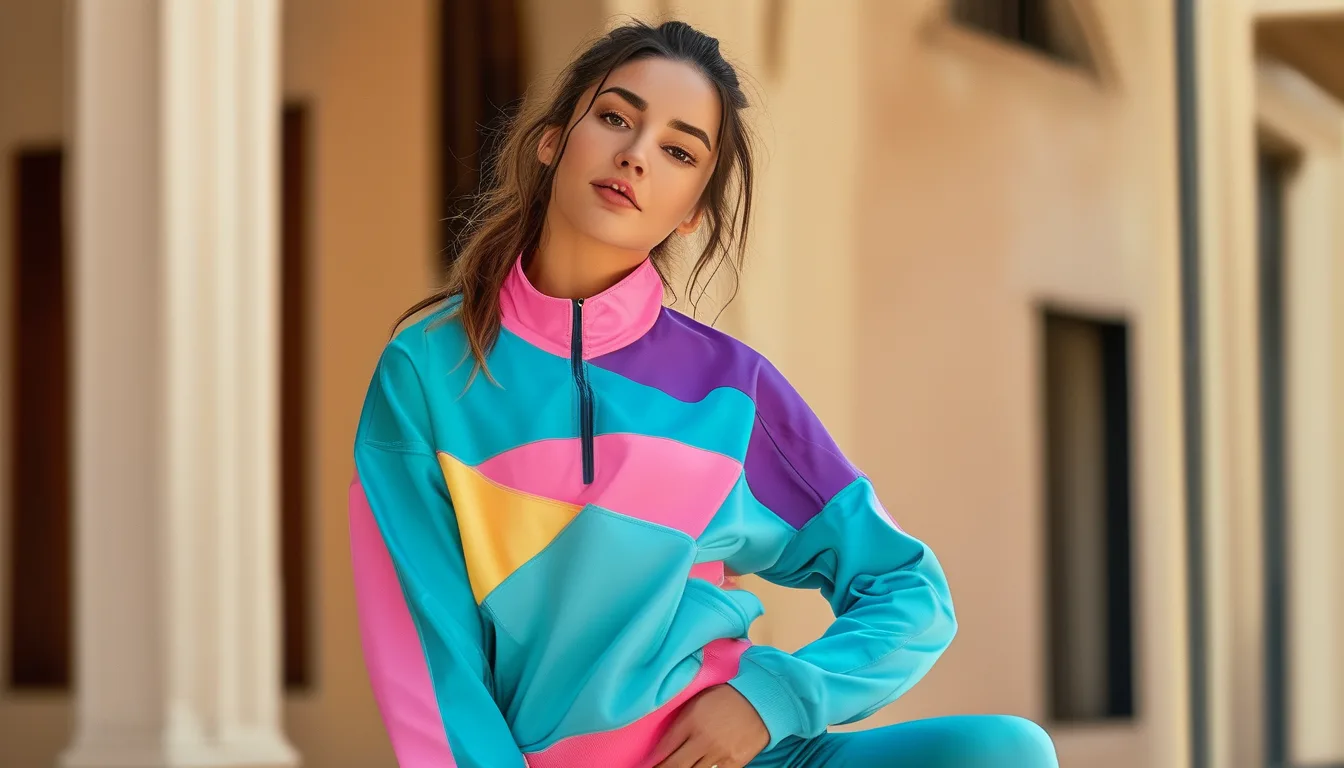
Quick Answer: Colourblocking works because of clear boundaries between solid areas. Adding a third layer usually breaks it by cutting one block in half or introducing a fourth colour. The fix is to treat the outer layer as either a neutral frame or as one of the existing blocks - never as a new colour competing with the two already there.
A two-piece colourblock outfit is easy. The third layer is where most of them fall apart, and it happens exactly as the weather starts requiring one.
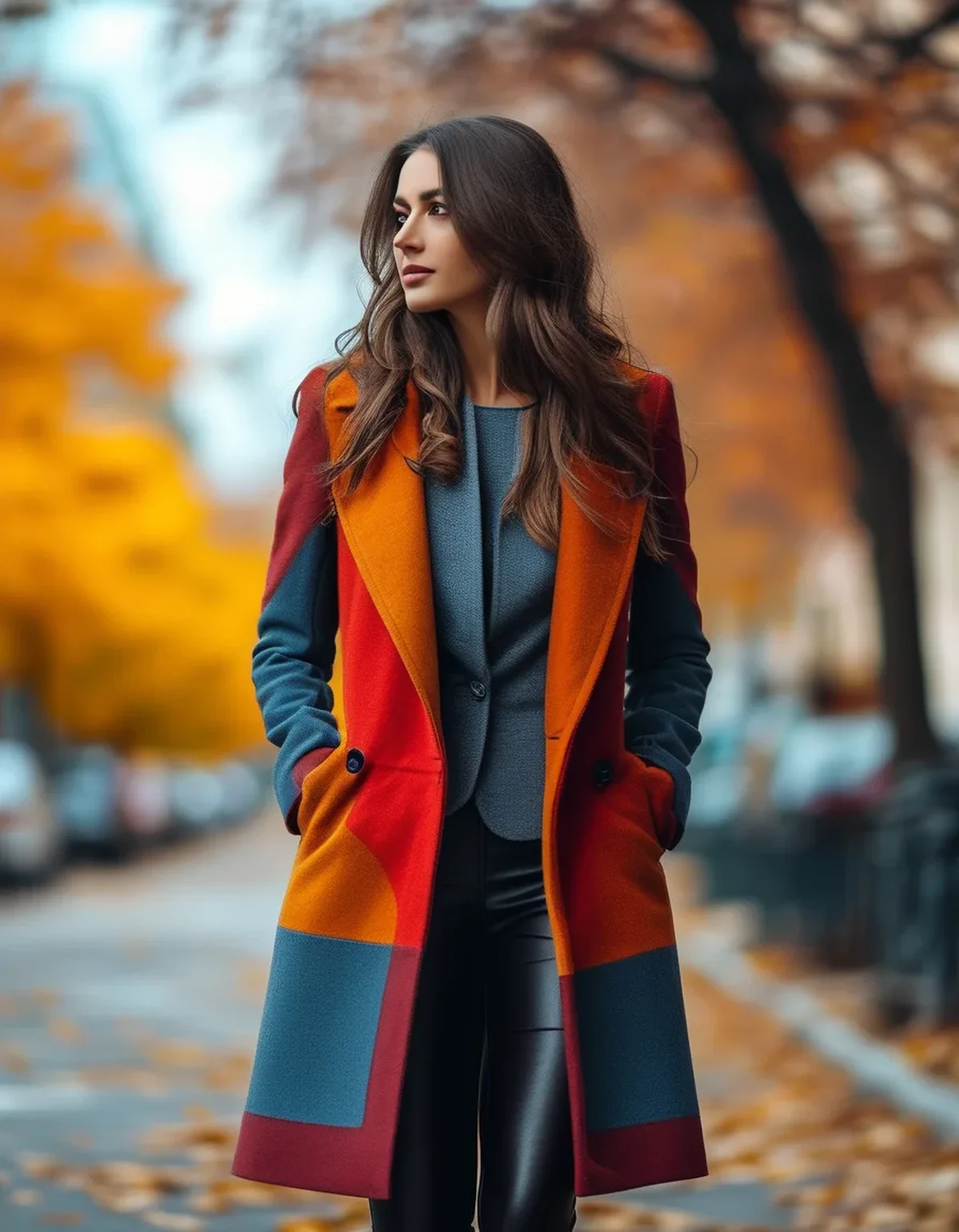
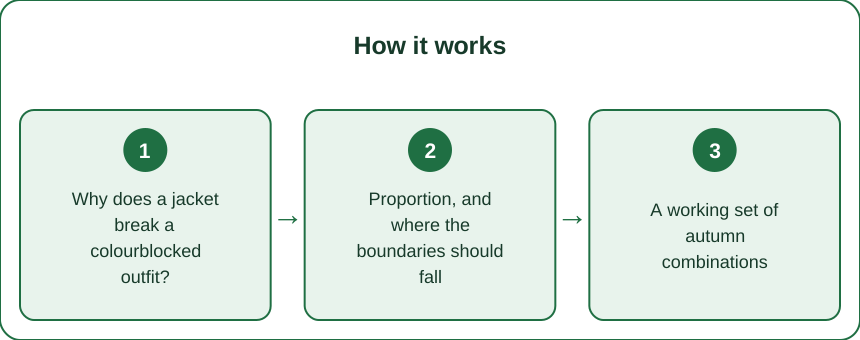
Why does a jacket break a colourblocked outfit?
Because colourblocking depends on the size and clarity of each block, and outerwear changes both.
What makes colourblocking work:
- Clear, unbroken areas of solid colour
- Defined boundaries between them, usually at a seam or a garment edge
- A limited number of colours - typically two or three
- Deliberate proportion between the blocks
What a jacket does to that:
- It covers part of a block, converting a clean shape into a fragment
- It introduces a fourth colour, which pushes past the point where the eye reads a system
- It changes the proportions, often making the upper block much larger
- It adds a vertical opening down the centre, splitting whatever is underneath
The result is the specific look people describe as ‘busy’ or ‘trying too hard’ - not because the colours are wrong, but because the block structure has stopped being legible.
Two working solutions:
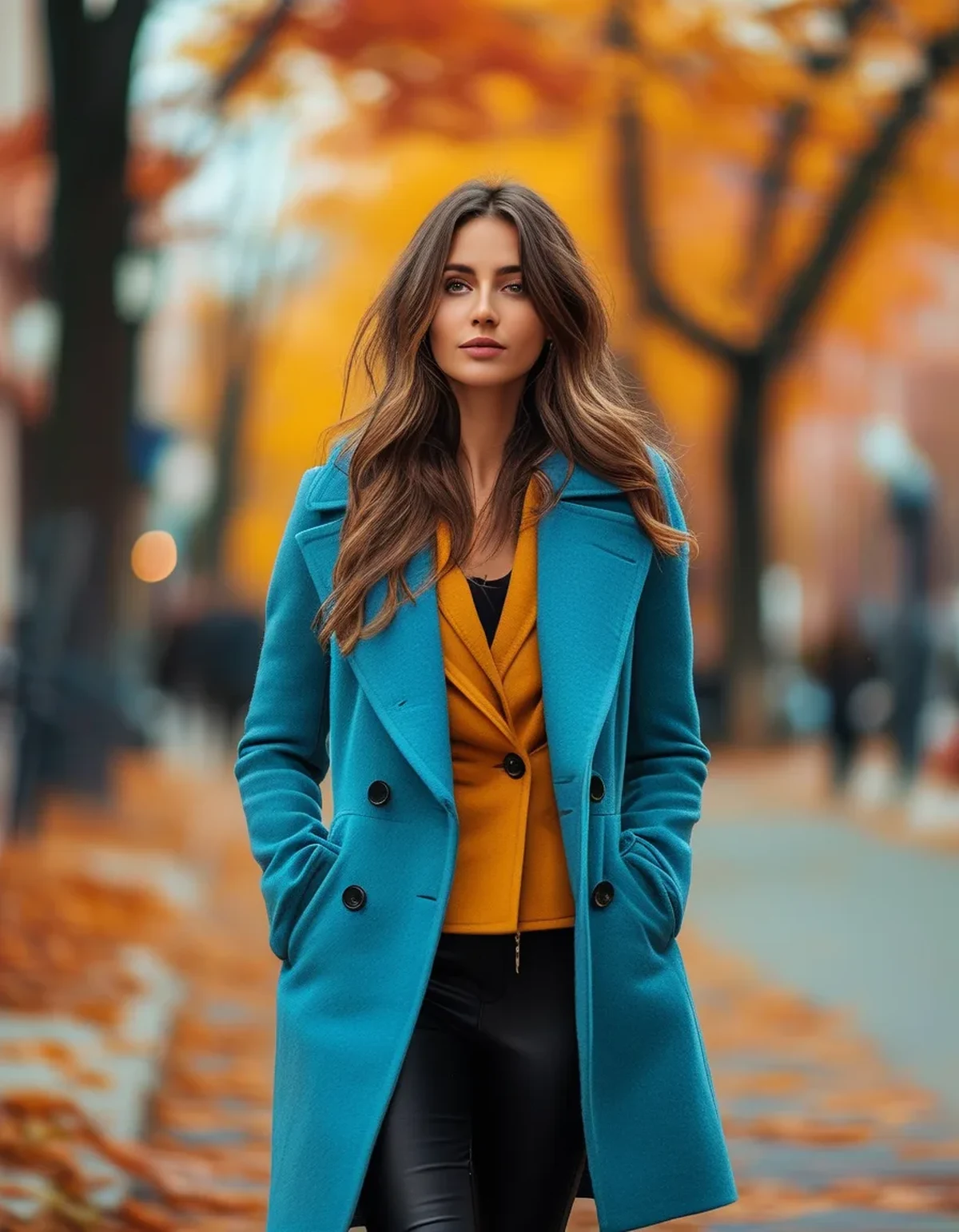
- The neutral frame: outer layer in black, cream, grey or camel. It reads as a border around the colourblock rather than as part of it, and it works with any combination underneath.
- The extended block: outer layer in the same colour as one of the existing blocks. This enlarges that block rather than adding a new one, which keeps the count at two or three.
What generally does not work: a fourth colour in the outer layer, unless it is a deliberate high-fashion choice executed with confidence and repeated somewhere else in the outfit.
Proportion, and where the boundaries should fall
Once the colour count is under control, proportion decides whether it looks designed.
The uneven split rule. Equal halves - top half one colour, bottom half another - is the least interesting and least flattering division, because it cuts the body in two at the waist. Uneven proportions read as considered.
- Roughly one-third to two-thirds is the most reliable split
- The larger block usually works better on the bottom for most frames, though a large upper block with a fitted bottom is a valid contemporary look
- A small third block - a band, a cuff, a shoe - adds interest without adding complexity
Where boundaries fall matters as much as the colours:
- A boundary at the narrowest part of the torso is flattering; one at the widest part draws attention there
- A boundary at mid-thigh shortens the leg; at the ankle or high hip it lengthens
- Horizontal boundaries widen; diagonal and vertical boundaries lengthen. Panelled leggings with vertical colour blocks are the clearest example of this working.
Layering-specific proportion notes:
- A cropped jacket over a colourblocked top creates a new boundary at the crop line, so check that line falls somewhere flattering
- A longline jacket covers most of the upper block, effectively converting a two-block outfit into a jacket-and-legs outfit
- An open jacket creates two narrow vertical strips of its own colour, framing whatever is underneath - which is usually flattering and is why open layering works so well
The single most useful check: photograph the outfit rather than looking in a mirror. Mirrors let the eye correct for what it expects to see; a photo shows the actual blocks and where they fall.
A working set of autumn combinations
Specific combinations that hold together with three layers.
Neutral frame combinations:
- Rust top, cream leggings, black jacket - the rust reads as the accent, black frames it
- Sage top, black leggings, cream jacket - lighter frame, softer overall
- Navy top, grey leggings, camel jacket - warm frame over cool blocks, which works because the frame is clearly separate
Extended block combinations:
- Black leggings, clay top, clay jacket - the clay block becomes the whole upper body
- Cream leggings, cream jacket, burgundy top - the burgundy sits as a contained block in the middle
- Olive throughout with a black block at the leg - tonal with one interruption
Three-colour combinations that hold:
- Cream, clay and black - the safest autumn trio
- Navy, sage and cream
- Chocolate, rust and oatmeal - fully warm, strongly seasonal
Practical notes for the transitional weeks:
- The layer you take off should be the neutral one, so the outfit underneath still works on its own
- Keep the accent colour on the layer you keep on, otherwise removing the jacket removes the interest
- A single bright accessory - a bag, a shoe, a cap - can carry the accent role, freeing the garments to be neutral
On texture as a substitute for colour: when the colour count is at its limit, texture adds interest without adding a block. A ribbed knit, a quilted panel, a matte-and-shine contrast all read as design without breaking the system.
5 Mistakes Everyone Makes Colourblocking With Layers
Mistake 1: Adding a fourth colour with the jacket. Three is the working limit for most people. A fourth colour converts a system into an assortment, and the eye stops reading it as intentional.
Mistake 2: Splitting the body exactly in half. Equal blocks at the waist is the least flattering possible division. Aim for roughly a one-third to two-thirds split and the whole thing improves immediately.
Mistake 3: Putting the accent colour on the removable layer. You take the jacket off at 2pm and the outfit becomes two neutrals. The interest should live on something you keep on.
Mistake 4: Ignoring where boundaries land on the body. A colour change at the widest part of the hip or the calf draws attention there. Move the boundary, not the colours.
Mistake 5 - the subtle one: near-matching instead of matching. An extended block only works if the two pieces are genuinely the same colour. A slightly different olive reads as a mistake, where a clearly different colour would have read as a choice.
FAQ: Colourblocking With Layers, Answered
How many colours can I use?
Two or three for most outfits. A fourth is possible but needs to be repeated somewhere else so it reads as deliberate rather than accidental.
What colour should my jacket be?
A neutral, or the exact same colour as one of your existing blocks. Those are the two options that keep the block structure legible.
Where should the colour boundary sit?
At the narrowest point of the torso, or at the ankle or high hip for the lower body. Avoid boundaries at the widest part of the hip or calf.
Does colourblocking work on all body types?
Yes, but the placement changes. Boundaries draw attention to where they fall, so put them where you want the eye to go rather than following a fixed formula.
How do I add interest without adding a colour?
Texture. Ribbing, quilting, mesh panels and matte-versus-shine contrasts all add visual interest while keeping the colour count where you want it.
TL;DR:
- A third layer breaks colourblocking by fragmenting blocks and adding a fourth colour
- Make outerwear either a neutral frame or an exact extension of an existing block
- Uneven proportions - roughly one-third to two-thirds - beat splitting the body in half
- Keep the accent on the layer you keep on, not the one you take off
- Texture adds interest when the colour count is already at its limit
Photograph the outfit rather than checking the mirror. The blocks are either legible in a photo or they are not, and that is the whole test.
See It in Motion
Seen here: High Waist 8” Yoga Shorts — shop similar styles on bubblelime.com
Keep Reading
This article is for general informational and styling purposes only. Fit, sizing, and product availability may vary.