Colorblocking When a Jacket Covers Half of It
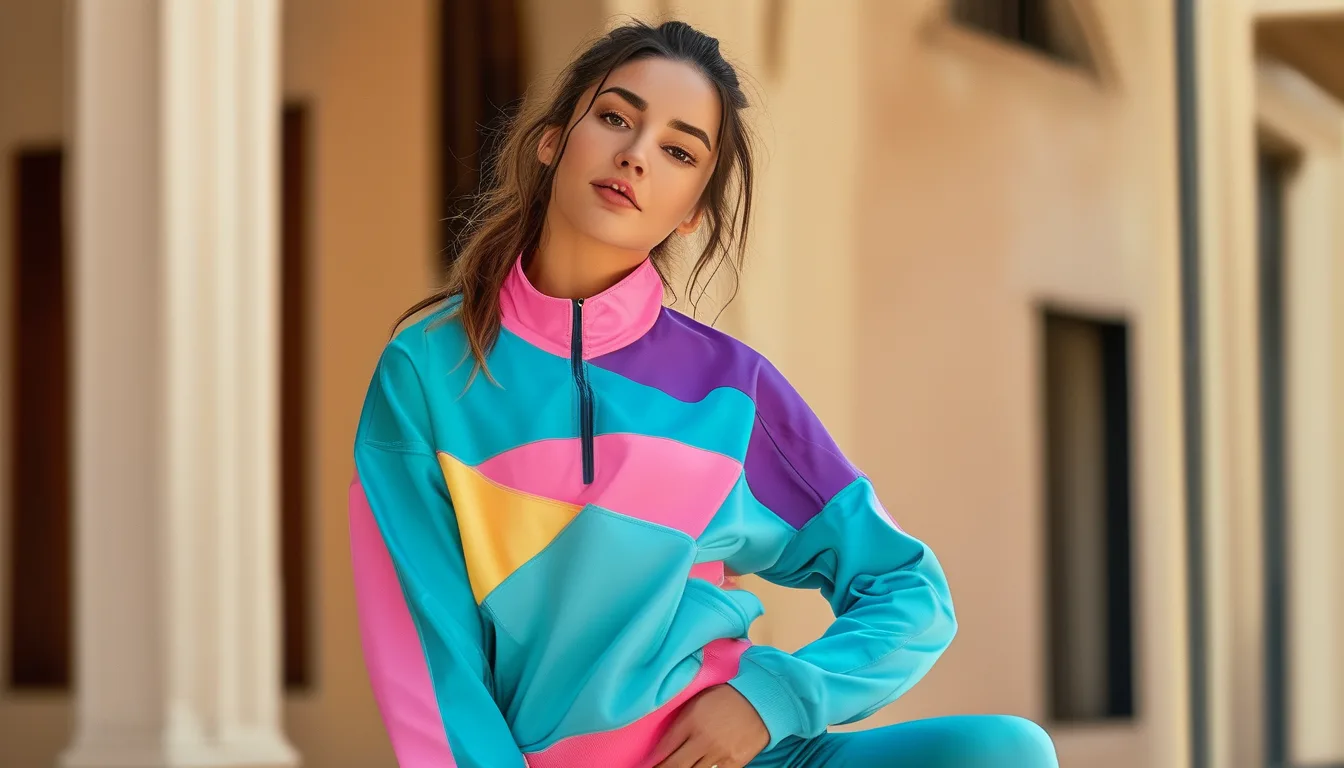
Quick Answer: Once outerwear covers your torso, the block you built between top and leggings disappears - so move the colour relationship to what stays visible: the jacket, the leg, and the shoe. The simplest reliable formula in cooler weather is a coloured outer layer over a single-colour base, with one accessory picking up the outer colour. Building the block underneath a jacket is effort nobody sees.
Colourblocking in autumn is not a smaller version of summer colourblocking. The visible canvas has changed shape.
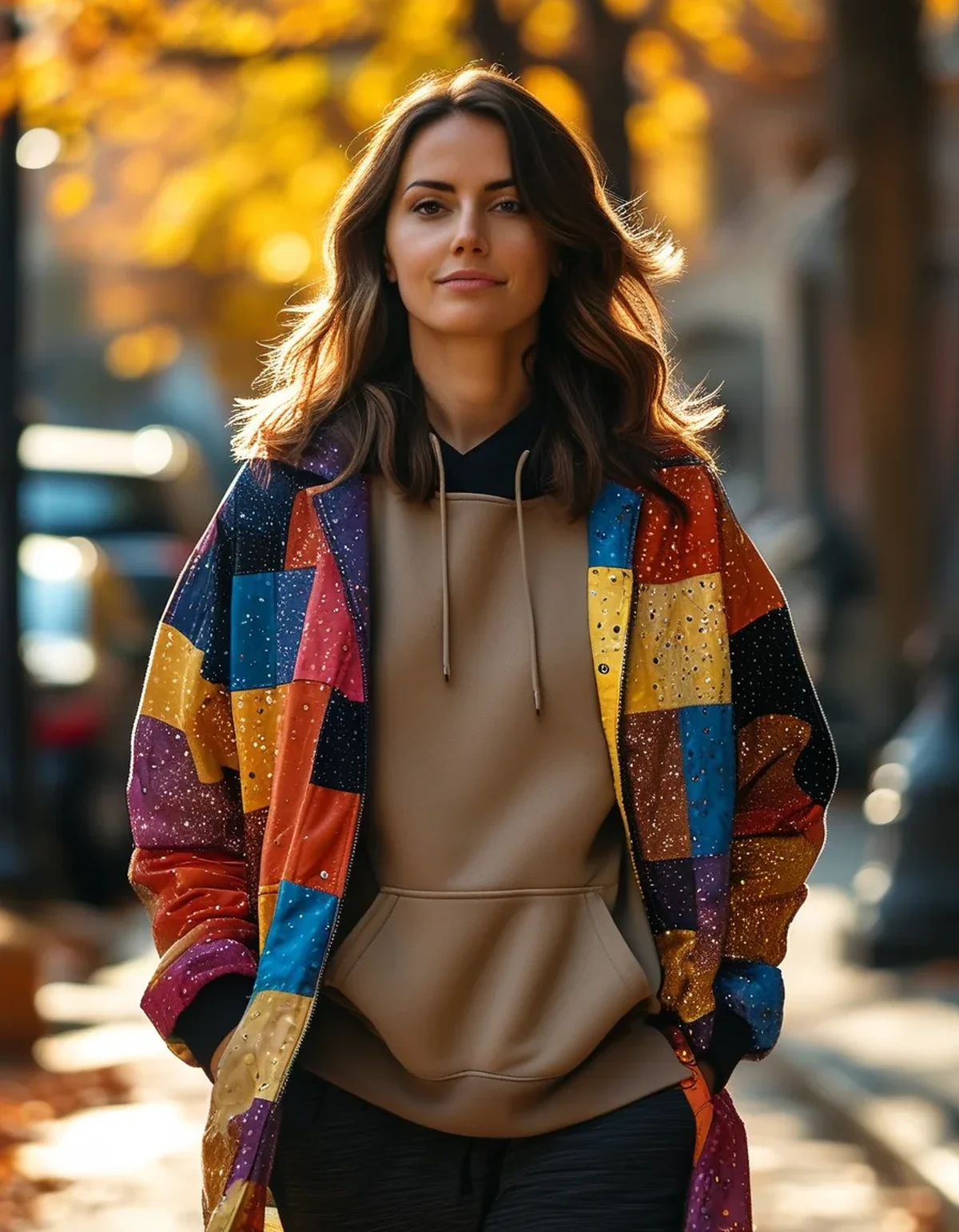
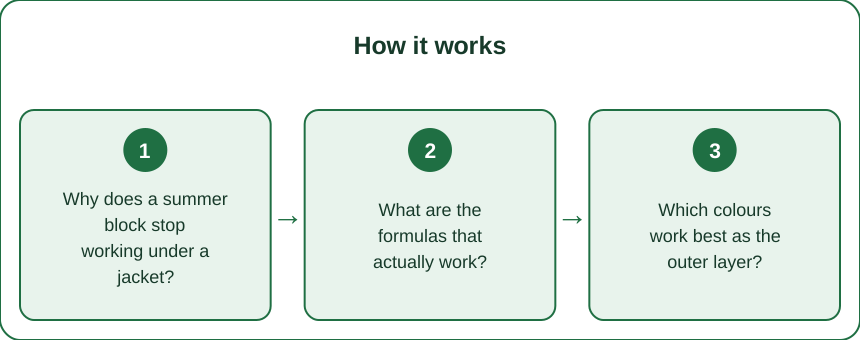
Why does a summer block stop working under a jacket?
Because the block was built across your torso, and the torso is now covered.
What a typical warm-weather colourblock looks like: a coloured sports bra or crop with contrasting leggings, or a top with a colour-blocked panel across the chest. All of that lives in the area a jacket covers first.
What remains visible once a layer goes on:
- The jacket itself, which is now the largest colour area by a wide margin
- The leg, from mid-thigh down
- The shoe and sock
- A collar or neckline, if the base layer has one
- Sleeve cuffs, occasionally
So the block has to be built from those. This is why so many autumn outfits look like a plain outfit with a coat on - the colour work was done in the wrong place.
Two consequences worth planning around:
The jacket dominates. A coloured outer layer is roughly half the visible outfit, which means it should be either the single colour statement or a neutral frame. A busy jacket over a busy base is the most common autumn colourblocking failure.
The leg becomes the second block. With the torso covered, the leg is the largest remaining area. A coloured legging under a neutral jacket does the work that a coloured top used to do.
The reframe that solves most of it: think of the outfit as jacket, leg, and shoe - three areas rather than five. Two colours across three areas is a clean block. Three colours across three areas is usually one too many once you are also carrying a bag.
What are the formulas that actually work?
Four, in order of reliability.
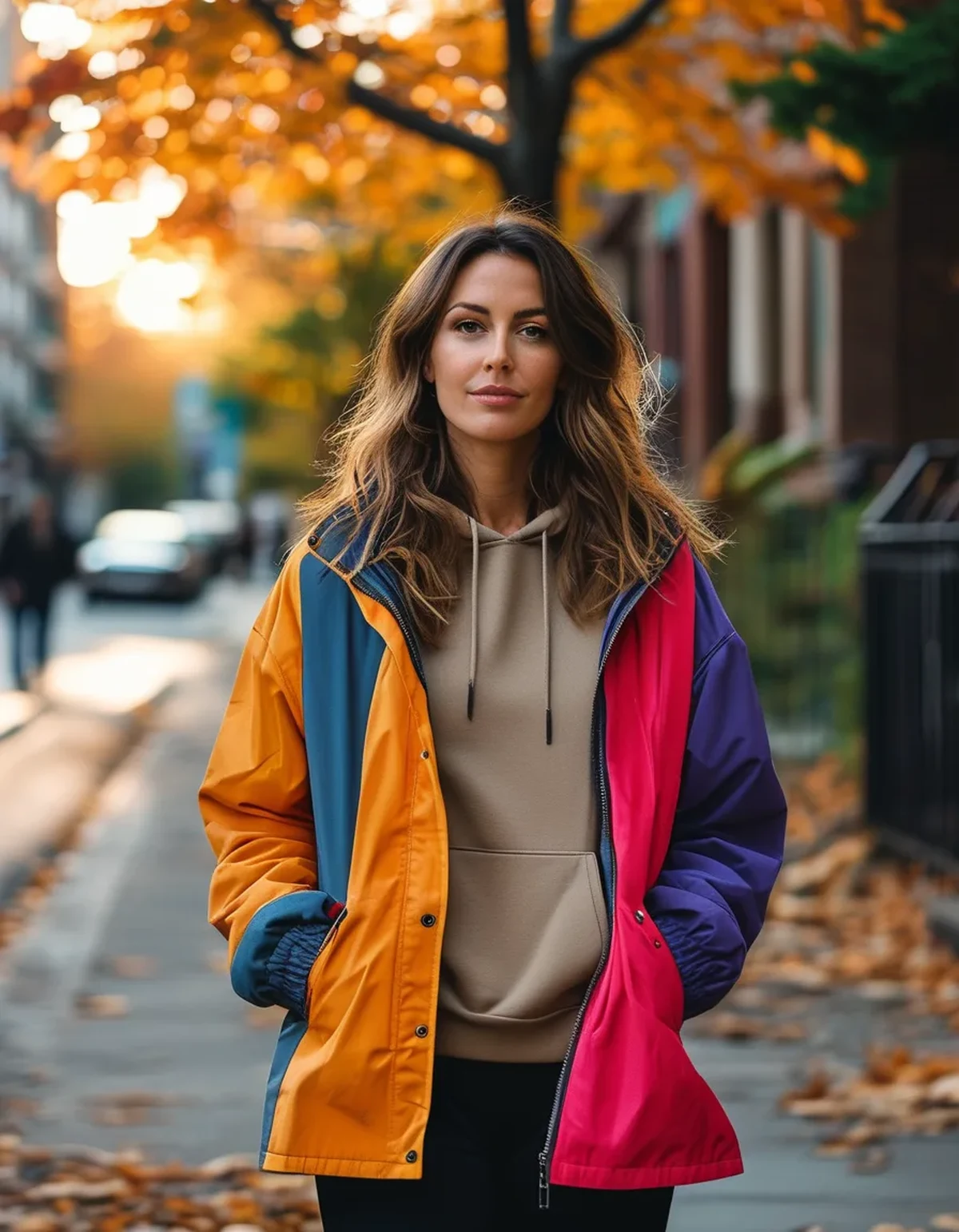
1. Coloured jacket over a single-colour base. The easiest and most striking. Head-to-toe black or charcoal underneath, with a coral, cobalt, or bright green outer layer. The base being one colour is what makes the jacket read as deliberate rather than as one item among several. This is the formula that works even on a rushed morning.
2. Neutral jacket, coloured leg, matching accessory. Black or camel jacket, coloured leggings, and a hat, bag, or shoe picking up the leg colour. The accessory is what turns a coloured legging from an accident into a scheme.
3. Two-tone within the outer layer. A jacket that is already colour-blocked - increasingly common in activewear - does the whole job on its own. In this case everything else stays neutral, full stop. One colour-blocked piece per outfit.
4. Tonal block. Three shades of the same hue across jacket, leg, and shoe. Sophisticated, easy to get right, and the most forgiving in the transitional weeks because the shades do not have to match exactly.
What consistently does not work:
- A coloured jacket over a coloured base. Two competing statements, and the jacket wins while the base looks accidental
- Three unrelated colours across jacket, leg, and shoe. Reads as coincidence rather than design
- A colour that only appears once, in a small area. A single flash of orange in a shoe, with nothing echoing it, looks like the only clean pair you had. Any colour should appear at least twice - which is the rule that makes accessories matter
On proportion: a cropped jacket over a coloured legging emphasises the leg block. A longline jacket covers more of the leg and turns the outfit into a jacket-and-shoe scheme. Both work; they are different outfits.
Which colours work best as the outer layer?
The saturated ones, and the reasoning is seasonal rather than aesthetic.
Everything around you is getting darker. Autumn light is lower and the backdrop is less bright, which means a colour that looked bold in July reads as merely present in October. Saturation is what carries a colour through low light.
Strong performers as an outer layer:
- Rust, burnt orange, and terracotta. Effectively seasonal colours already, and they work over black, cream, or brown
- Cobalt and deep teal. Excellent against black and charcoal, and both photograph well
- Forest and emerald green. The strongest autumn colour of the last few seasons and unusually versatile
- Deep coral and tomato red. Warm and confident, and they carry into winter
- Mustard, with the caveat that it is close to some skin tones and can wash people out - test it near your face
Weaker performers:
- Pastels of any kind, which lack the saturation to read in low light
- Neon yellow-green, which is genuinely difficult under grey skies
- Anything very pale, which looks summery regardless of the fabric weight
On the base underneath. Black is the easiest, charcoal is softer, and chocolate brown is the current best-value neutral because it makes almost every warm colour read as autumn. Cream is excellent and impractical for training.
A note on hi-vis, if you train outdoors in the dark. Fluorescent yellow and orange are functional rather than decorative, and they are the one case where colour choice is a safety decision. The good news is that a hi-vis outer layer is a colour block by definition - keep everything under it neutral and the outfit works while doing its actual job.
Myth vs Fact: Colourblocking Under Layers
Myth: Colourblocking is a summer thing. Fact: The visible canvas changes, not the principle. Autumn colourblocking happens between the outer layer, the leg, and the shoe.
Myth: You need matching colours to colourblock. Fact: Matching is a tonal scheme. Colourblocking is about deliberate contrast between defined areas - matched shades are one version of it, not the requirement.
Myth: Dark seasons mean dark clothes. Fact: A single saturated colour against dark neutrals reads more strongly in autumn than the same colour did in summer, because there is less competing brightness around it.
Myth: An accessory is too small to count as a block. Fact: A bag, hat, or shoe repeating the jacket colour is what converts a single colour into a scheme. A colour that appears only once reads as accidental - this is the single most useful rule here and the one nobody applies.
Myth: You should not mix warm and cool colours. Fact: You can, and the reliable way is to keep one of them dominant and the other small. A cobalt jacket with a rust beanie works; equal amounts of both is where it gets difficult.
Myth: Black goes with everything, so the base does not matter. Fact: It does go with everything, and it also absorbs light and flattens shape, so an all-black base under a bright jacket can look like a colour floating on nothing. Charcoal or brown gives more depth for the same versatility.
How do you build a small wardrobe that does this?
Six pieces, and it covers most of the season.
The base, in one neutral:
- Leggings in black or charcoal
- A longline top in the same neutral
- A neutral base layer for colder days
The colour, in one hue:
- A jacket in your chosen saturated colour. This is the piece to spend on, because it is half the visible outfit and it appears in every outfit
- One accessory in the same colour - a beanie, a bag, or a pair of gloves. Cheap and it does the doubling work
- A pair of trainers in either the neutral or the colour, not a third thing
How many colours to own: one or two saturated outer colours is plenty. A wardrobe with four bright jackets and no coherent base produces fewer working outfits than one jacket and a matched neutral base.
Building over time. If you are starting from an all-black activewear drawer - which most people are - the highest-return single purchase is a saturated outer layer. It converts every existing outfit into a colour-blocked one, at the cost of one item.
On mixing in a print piece. A print counts as a colour area and usually as more than one. If a print is in the outfit, everything else stays solid and the colours are pulled from within the print. This is the safest way to introduce pattern into a block.
A last practical note for the transitional weeks specifically. Mornings and afternoons are far apart in temperature right now, which means the jacket comes off. A block that only works with the jacket on will collapse at midday, so it is worth checking that the base underneath is a complete outfit on its own - single-colour, correctly proportioned, and not obviously waiting for something over it. That is a small thing to check in the mirror and it saves the afternoon.
FAQ: Autumn Colourblocking Questions, Answered
How do I colourblock when a jacket covers my top?
Move the colour relationship to the jacket, the leg, and the shoe. The most reliable formula is a coloured outer layer over a single-colour base with one accessory repeating the jacket colour.
How many colours should be in one outfit?
Two, plus a neutral. Three unrelated colours across jacket, leg, and shoe reads as coincidence rather than design.
Which colours work best for an autumn outer layer?
Saturated ones - rust, cobalt, emerald, deep coral, burnt orange. Pastels lack the saturation to carry in low autumn light.
Does an accessory really count?
Yes, and it does more than its size suggests. A colour that appears twice reads as intentional; a colour that appears once reads as accidental.
What is the single best purchase if my activewear is all black?
One saturated outer layer. It converts every outfit you already own into a colour-blocked one for the cost of a single item.
TL;DR:
- Once a jacket goes on, the block lives between the outer layer, the leg, and the shoe - not across your torso
- The most reliable formula is a coloured jacket over a single-colour base
- Any colour should appear at least twice, which is what accessories are for
- Saturated colours carry in low autumn light; pastels do not
- Check the base works as a complete outfit on its own, because the jacket comes off by midday
One saturated outer layer over an all-neutral base is the highest-return purchase for anyone whose activewear drawer is entirely black.
See It in Motion
Seen here: High Waist Embossed Yoga Leggings with Side Pockets — shop it on bubblelime.com
Keep Reading
This article is for general informational and styling purposes only. Fit, sizing, and product availability may vary.