How to Colorblock When You Are Adding a Jacket Over Everything

Quick Answer: A colorblocked outfit is a designed arrangement of shapes, and an open jacket cuts a vertical strip through the middle of it - hiding roughly the outer third of each side and often the whole torso block. Solve it by making the jacket either the loudest block or a completely neutral frame, never a third competing mid-tone. The block you most want visible should sit in the centre or below the waist.
You spent a season building outfits where a bright top met a contrasting legging at exactly the right place, and now everything goes on under a jacket and reads as noise. The arrangement is still good. It is just being cropped.
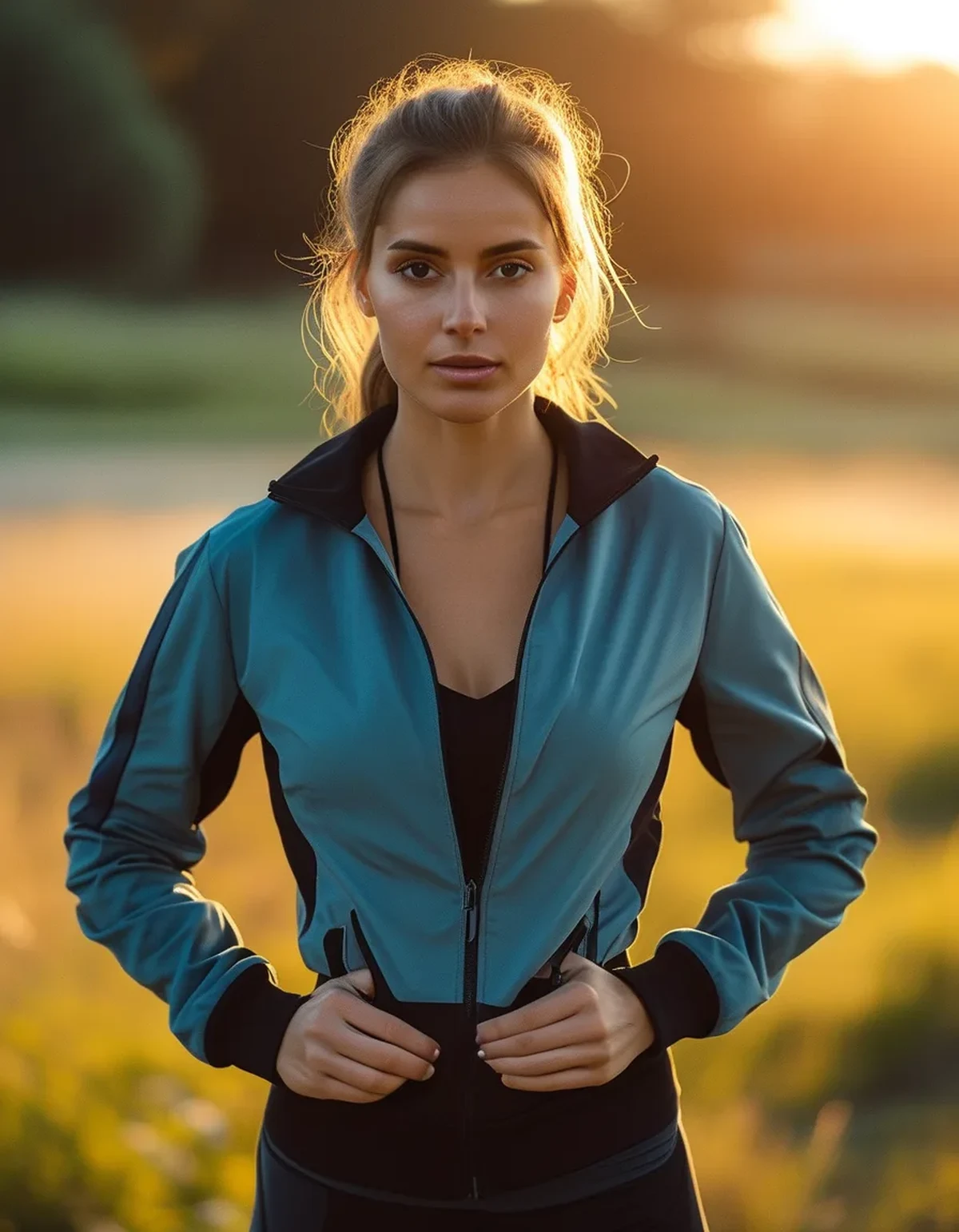
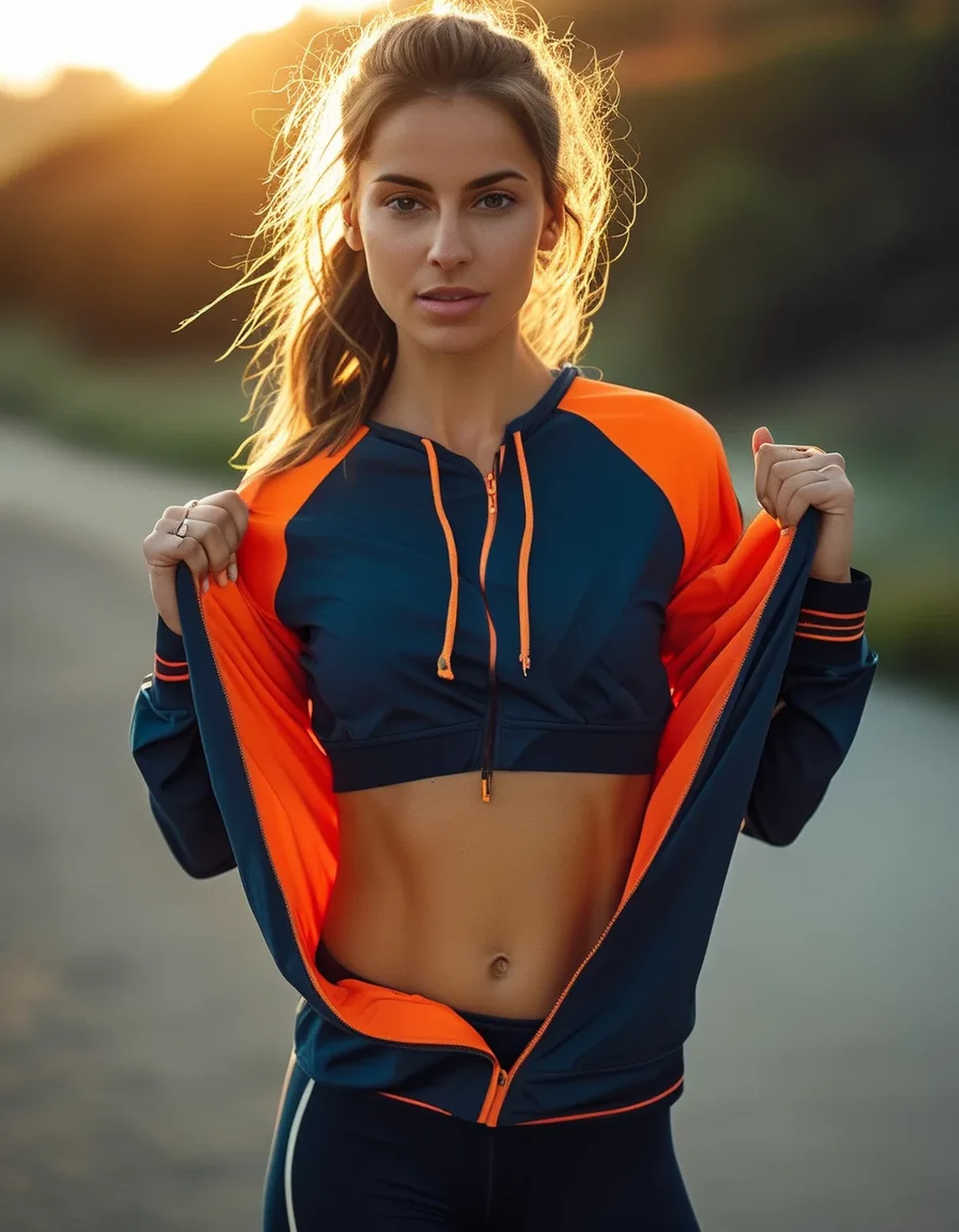
What does a jacket actually do to a colorblocked outfit?
It changes the geometry, not just the coverage.
A colorblocked outfit works because your eye reads a sequence of shapes - a block of color here, a contrasting block there, a defined boundary between them. The composition depends on the relative size and position of those shapes.
An open jacket does three things at once. It covers the outer edges of your torso block, typically hiding the outer third on each side, which changes a wide shape into a narrow vertical strip. It adds a new large block in a third color, usually the largest single block in the outfit. And it introduces two long vertical edges down the front, which your eye follows and which compete with the horizontal boundary at your waist that the original outfit was built around.
So you go from a two-block composition with one strong horizontal division to a five-region composition with strong vertical lines. That is not a small change and it is why outfits that photograph beautifully in summer look chaotic the first cool week.
Zipping the jacket is more decisive - it replaces the top block entirely, which is a cleaner outcome but wastes whatever was underneath.
What jacket colors actually work over a colorblocked base?
There are two reliable strategies and one that consistently fails.
Strategy one: the neutral frame. A jacket in black, cream, grey, navy, or camel behaves as a frame rather than a competing block. Your eye reads it as the boundary of the image rather than as part of the composition, so the colorblocked strip down the centre stays legible. This is the safest option by a wide margin and it is why neutral outerwear is so useful.
Strategy two: the dominant block. A jacket in a color that is clearly the boldest thing in the outfit takes over as the focal point, and the base becomes supporting detail. This works when the base is comparatively quiet - two closely related colors rather than a high-contrast pair.
What fails: a third mid-tone. A jacket in another medium-saturation color of similar visual weight to the base creates three blocks competing for attention with no hierarchy. Your eye has nowhere to settle. This is the single most common autumn layering mistake and it is why a perfectly nice jacket can ruin a perfectly nice outfit.
The test: rank the three colors by visual weight. You want a clear first, second, and third. If you cannot rank them - if they all feel about equally loud - change the jacket.
5 Mistakes When Layering Over Colorblock
1. Letting the jacket hem land exactly at the base’s colour boundary. If your top meets your leggings at the hip and the jacket also ends at the hip, you get three edges stacked in a narrow band. Choose a jacket that ends clearly above or below the base’s boundary - a cropped jacket above the waist or a longer one at mid-thigh both read cleanly.
2. Keeping the loud block up top when it will be covered. If your bright block is the top and it disappears under the jacket, you have lost the outfit. When you know you are layering, put the standout color below the waist or in a piece that shows in the open centre strip.
3. Adding a printed or logo-heavy jacket. A print over colorblock is two organizing systems fighting. Save prints for solid bases.
4. Forgetting the shoes are a block. Shoes are a substantial block of colour at the bottom of the composition and people treat them as an afterthought. Bright shoes with a colorblocked base plus a jacket is four competing elements. Neutral shoes, or shoes that repeat a colour already present, keep the count down.
5. Only checking it zipped or only checking it open. You will wear it both ways within a single morning. A combination that works open and reads as a random pairing zipped is a combination you will be unhappy with by 10am - check both before you leave.
How do I build a base that layers well from the start?
Design the base knowing a jacket is coming, and the whole problem mostly disappears.
Put the interest low. A colorblocked legging with a plain top is far more layer-friendly than the reverse, because the legging is never hidden. This inverts the usual summer instinct and it is the single most useful adjustment for the season.
Use a centre-visible detail. A colored sports bra or a contrast panel down the front of a top stays visible in the strip the open jacket leaves. Designing around that strip means the base still contributes something once covered.
Repeat one colour between base and jacket. If your jacket picks up a colour that appears in your leggings, the whole outfit coheres regardless of what is hidden. Colour repetition is the cheapest way to make a three-piece outfit look intentional.
Keep the total colour count to three. Base colour one, base colour two, jacket - plus neutrals for shoes and accessories, which do not count against the total if they are genuinely neutral. Beyond three, an open jacket almost guarantees visual clutter.
Build one neutral jacket you trust. A single well-fitting jacket in black, cream, or camel that goes over everything is worth more than three coloured ones, because it converts every colorblocked outfit you own into a layerable outfit without any further thought.
FAQ: Colorblock Layering Questions, Answered
Does a vest or gilet solve the same problem better than a jacket?
Often yes, and it is underrated for exactly this. A vest leaves the sleeves visible, so a colorblocked top keeps its shoulder and arm blocks - you lose the torso and keep the rest, which preserves much more of the original composition. In the transitional weeks where a full jacket is too warm, a vest is both the more comfortable and the more visually coherent option.
Can I colorblock with the jacket itself - a two-tone jacket over a plain base?
Yes, and it is one of the cleanest approaches for outerwear season. It puts the colour arrangement in the layer that is always visible, which means the outfit does not change character when you take the jacket off - it just becomes a plain base, which is fine. Keep whatever is underneath genuinely simple.
How do I handle this when I am wearing a backpack or a crossbody bag?
Treat the strap as a line, not a block - it cuts diagonally across your torso and interrupts any boundary it crosses. A strap in a colour already in the outfit disappears; a contrasting one becomes a graphic element that will dominate photographs. If you carry a bag daily, choose the strap colour as deliberately as you choose the jacket.
TL;DR:
- An open jacket crops the outer third of your torso block and adds strong vertical lines, turning two blocks into five regions.
- Make the jacket either a neutral frame or the clearly dominant block - never a third competing mid-tone.
- Put the standout colour below the waist, avoid stacking hems at the same boundary, and count your shoes as a block.
- Keep to three colours, repeat one between base and jacket, and check the outfit both open and zipped.
Colorblocking does not stop working in autumn - it just stops working the way you arranged it for summer. Move the interesting block downward, add one neutral jacket that frames everything, and the outfits you already own start layering cleanly instead of turning into a pile of competing colours.
See It in Motion
Seen here: High Waist 8” Yoga Shorts — shop similar styles on bubblelime.com
Keep Reading
This article is for general informational and styling purposes only. Fit, sizing, and product availability may vary.